
by Julie Ganner AE
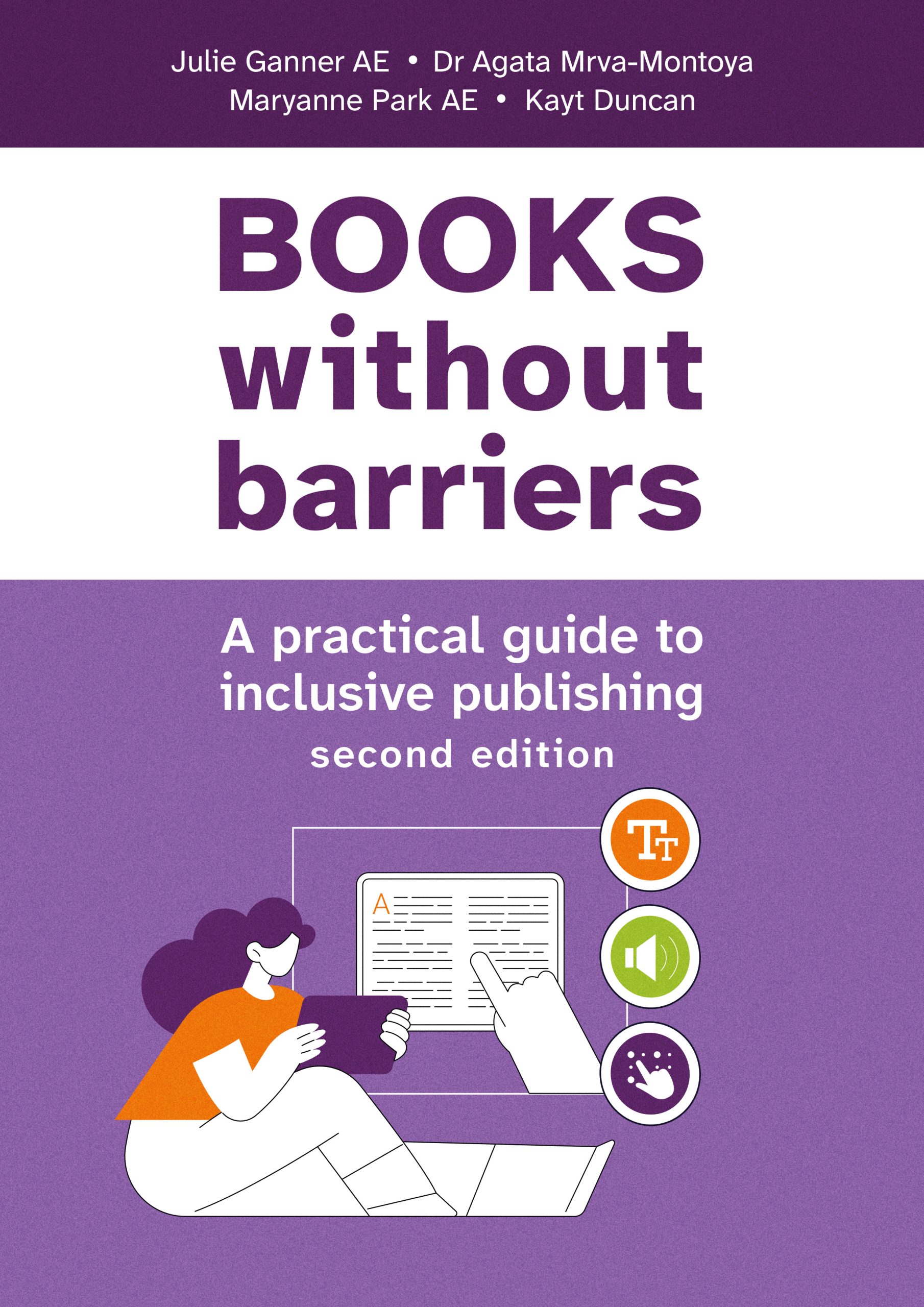
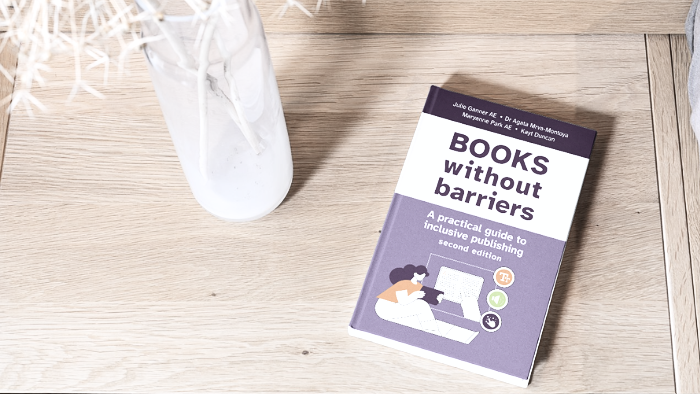
We are delighted to announce that the second edition of Books without barriers will be published on 5 June.
This free guide, which is co-published by IPEd and the Australian Publishers Association, provides practical advice on how ensure accessibility considerations are factored into every stage of the publishing process, from writing and editing to design and production.
Everyone involved in the book publishing process should know how to prepare text and images so that people who read through hearing or touch don’t miss out on information that is conveyed visually. Books without barriers offers detailed guidance on how to prevent the barriers to reading that people with print disability encounter when their needs are not supported. As the IPEd standards for editing practice make clear, “All types of editing should involve editing for accessibility”.
This is not a niche consideration for editors: it should be as much a core part of our daily practice as checking for spelling and grammar errors.
The advice in Books without barriers has been carefully reviewed by specialists including publishers and researchers working across digital, audio, tactile and print formats; individuals with print disability; and writers and editors across all publishing genres. The revised edition has a broader, more international focus, incorporating the latest research worldwide as well as feedback gathered from users of the first edition. It addresses recent advances in accessibility implementation, including emerging technologies and the growing applications of generative artificial intelligence. Checklists and templates for accessibility best practice are included throughout, along with a comprehensive glossary of publishing and accessibility terms.
Books without barriers is available in a choice of formats: EPUB and MS Word (both of which are accessible) and PDF. You can download your free copy from the IPEd website.
Agata Mrva-Montoya and I will present a talk on the second edition on Tuesday 14 July. You can register and book your place via this link. We’ll outline some of the key issues the writing team has researched over the past 3 years, and how the advice in the guide has been updated to address them. We hope to see you there!